
Issue
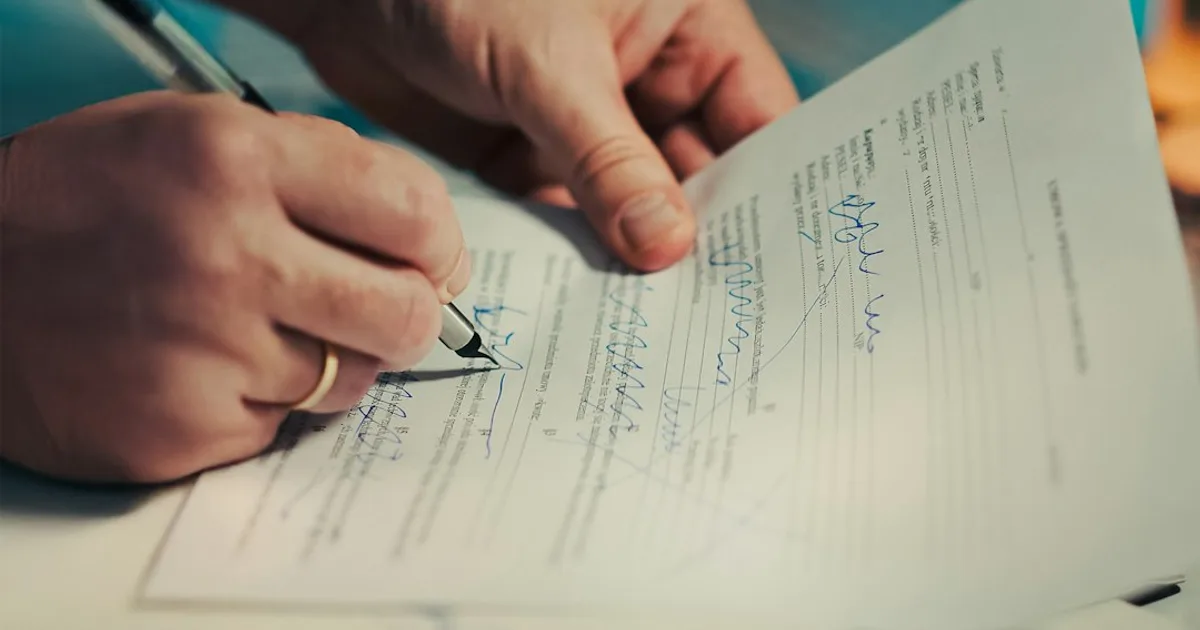
The manufacturer sent a 22-page template contract to be signed within 3 weeks: exclusivity lost if sales fall short for one quarter, termination on only 30 days' notice, disputes heard in a Korean court.
What HDS did
Reviewed the entire English version; prepared a table of 14 points to amend, ranked in 3 levels, with alternative wording; joined 3 online meeting rounds with the manufacturer; prepared an implementation guide after signing.
Result
The contract was signed on time with 11/14 points accepted; targets measured annually, termination requires 180 days' notice and the manufacturer buys back unsold stock.
Background
The client, a building materials distributor in Hanoi, was offered an exclusive distributorship in Vietnam for 3 years by a Korean waterproofing manufacturer, with a purchase commitment of USD 600,000 per year. To launch, the company planned to spend about VND 3 billion on warehousing, a technical team and marketing.
The manufacturer sent a 22-page template contract in English and asked for signature within 3 weeks to catch the construction season. The board intended to sign, believing that a foreign partner's template could not be changed.
Legal issue
HDS reviewed it in 5 working days and noted 14 points, of which 4 could cost the company its entire investment:
- Exclusivity and targets. Missing the sales target for one quarter meant losing exclusivity immediately, even if the cause was the manufacturer's late delivery.
- Termination. The manufacturer could terminate at any time on 30 days' notice, with no compensation, and unsold stock would be the company's loss. The client buys goods outright to resell, making it the owner of the goods, so this relationship differs from a commercial agency under Article 166 and Article 170 of the Commercial Law. The company could not rely on the 60-day period and the compensation for agents in Article 177, so its rights had to be written clearly into the contract.
- Trademark. The search showed that the manufacturer's trademark was not yet protected in Vietnam, while the contract made the company bear all risks if a third party raised a claim.
- Governing law and forum. The draft chose Korean law and the courts in Seoul. Article 683 of the Civil Code allows parties to choose the governing law, so this clause may be valid, but the cost of litigating in Korea would make it almost impossible for the company to pursue a small or mid-sized dispute.
In addition, the draft required the company to sell at the retail price set by the manufacturer. HDS noted that this clause carried a risk of an anti-competitive agreement under Article 11 and Article 12 of the Competition Law.
How HDS handled it
- Preparing the review table. 14 points were presented in both languages and ranked in 3 levels: must amend, should amend, acceptable. Each point stated the risk in a specific amount and came with replacement wording to make it easy for the counterparty to agree.
- Agreeing limits with the client. The board settled on 4 "must amend" points; if the counterparty did not concede on these, the company would not sign. The remaining points were used as room for trade-offs.
- Negotiating 3 rounds. HDS joined the online meetings in English and sent back a redline after each round. The arguments focused on shared interests: a distributor will only invest in warehousing and a technical team if it has time to recoup its investment.
- Finalizing after signing. HDS prepared a 2-page implementation guide covering sales reporting milestones, notice periods and how to keep records of late deliveries, for the sales team to use every day.
| Item | Initial draft | Signed version |
|---|---|---|
| Exclusivity target | Measured quarterly; a shortfall means immediate loss | Measured annually, excluding shortfalls caused by late delivery, with a 60-day cure period |
| Termination | 30 days' notice, no compensation | 180 days' notice; the manufacturer buys back unsold stock that is still within its shelf life |
| Trademarks | The company bears all risks | The manufacturer registers the trademark in Vietnam and is responsible for third-party claims |
| Dispute resolution | Courts in Seoul | Arbitration in Singapore, in English |
| Resale price | Mandatory price | Recommended price |
Result
The contract was signed on time after 3 weeks, with 11/14 points accepted, including all 4 "must amend" points. The remaining 3 points were in the "acceptable" level; the company noted the risks and manages them in operations.
With the arbitration clause, an award can be recognized and enforced in Vietnam and Korea under the New York Convention 1958, instead of having to take part in Korean court proceedings.
Lessons for businesses
- A foreign partner's template contract can still be negotiated, especially when proposed changes come with specific alternative wording.
- A distributor that buys goods outright should not assume it is protected like an agent. Notice periods and the handling of unsold stock must be written into the contract.
- Check your partner's trademark in Vietnam before investing in marketing for that brand.
Legal basis
- Commercial Law 2005: Article 166, Article 170, Article 177.
- Civil Code 2015: Article 683.
- Law on Commercial Arbitration 2010: Article 5, Article 16.
- Law on Competition 2018: Article 11, Article 12.
- New York Convention 1958 on the Recognition and Enforcement of Foreign Arbitral Awards.
The client's name and identifying details have been removed to protect confidentiality. The results above relate to the specific file in this case and are not a promise for any other case.