Business licences and sub-licences: how to tell them apart to avoid violations
How an Enterprise Registration Certificate differs from a sub-licence, which industries need a sub-licence, and the penalties for operating without one.


"I already have a business licence, so why was I fined?" This is a situation many restaurant owners, travel companies and training centres face. The cause is confusing the Enterprise Registration Certificate with a sub-licence.
Enterprise Registration Certificate and sub-licence
| Item | Enterprise Registration Certificate | Sub-licences |
|---|---|---|
| Issued by | Business registration authority | Ministries, departments and specialised authorities |
| Required for | Every company | Conditional Business Lines |
| Timing | Upon establishment | Before operating in a conditional industry |
| Term | No expiry date stated | Many types have a term and must be renewed |
Enterprise Registration Certificate
Commonly called the "business licence", this document records the company's registration details: name, tax code, head office, charter capital and legal representative. Every company receives it upon establishment.
What Is a Sub-Licence?
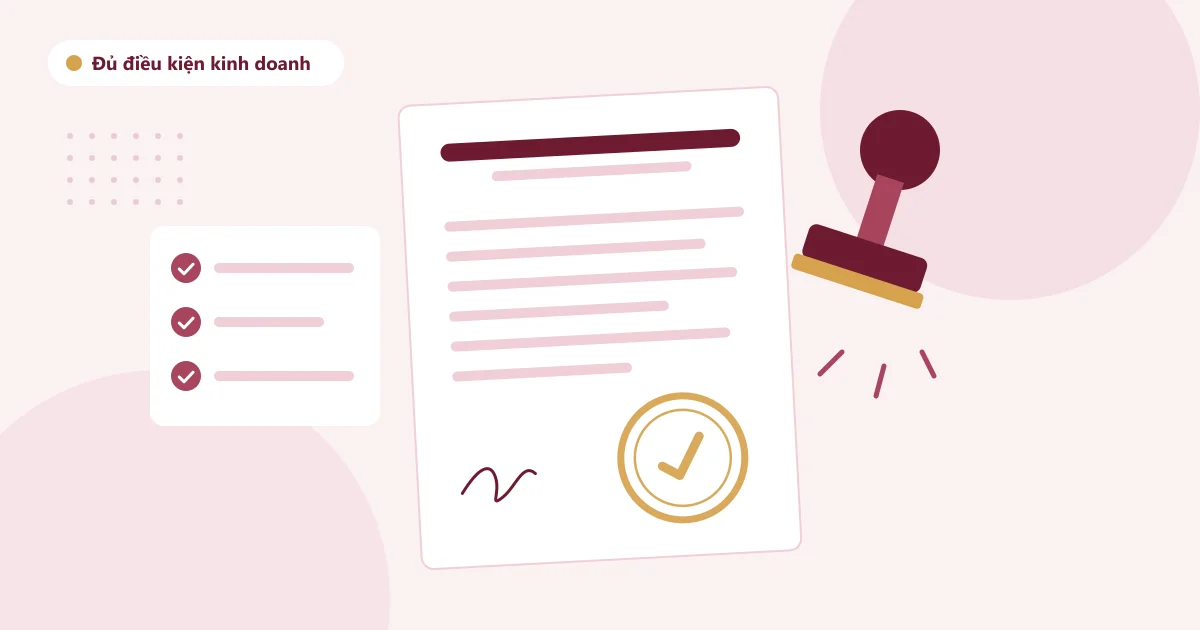
"Sub-licence" is a general term for the licences, certificates of eligibility and permits a company must hold to operate in a conditional business line listed in the Law on Investment. Examples include a food safety eligibility certificate, a travel services licence and an education operation licence.
Common Examples
- Restaurants and eateries: food safety, and possibly fire prevention and fighting requirements.
- Travel companies: travel services licence and a security deposit.
- Online stores: notification or registration with the Ministry of Industry and Trade.
- Foreign-invested retail companies: business licence.
Operating Without a Sub-Licence
A company may operate in a conditional industry only if it meets the conditions and keeps meeting them throughout its operations. Violations can lead to administrative penalties, suspension of operations, and damage to reputation and to contracts with partners.
How to Check Your Business Lines
Compare your planned business lines against the List of Conditional Investment and Business Lines and the relevant sector regulations. The quickest way is to send your list of business lines to a lawyer for review before setting up your company..
HDS Law reviews the conditions free of charge and handles the full sub-licence application..
Content reviewed by Lawyer Đoàn Minh Đức (Director – Managing Lawyer); updated 18 Sep 2026.
This article is for reference only, based on regulations as of the update date. For advice on your specific case, please contact a lawyer.